Try our newest merchandise


On the seventeenth evening of Ramadan – a time meant for prayer, reflection and mercy – Gaza burned. As soon as once more, our screens fill with photos too harrowing to explain: tiny our bodies wrapped in bloodstained material, fathers carrying their youngsters’s stays in plastic luggage, moms screaming into skies that rain loss of life as a substitute of mercy. In lower than an hour, Israeli airstrikes killed over 350 Palestinians, together with 90 youngsters. Complete households worn out as bombs fell on areas Israel itself had designated as “secure zones”, turning supposed sanctuaries into mass graves.
This was not merely a resumption of violence. That is the continuation of a genocide that by no means really paused, solely ebbed sufficient to fade from headlines whereas Palestinians continued to die by the handfuls day by day. The heaviness of this second is insufferable, bringing again the brokenness of the previous 12 months that has not but healed. For this slaughter to proceed whereas the world watches reveals how deeply detached world powers have develop into to Palestinian struggling, how completely dehumanized a whole individuals have to be for his or her bloodbath to be debated as a matter of “safety issues”.
These latest atrocities underscore the continued actuality that Palestinians have confronted for months now. Within the ruins of Gaza, amid the countlessly violated “ceasefire”, Palestinians confront not solely the monumental job of rebuilding but in addition a battle for who will management their future. Since 2 March, Israel has not allowed in any help, most significantly meals and reconstruction assets, whereas Gazans starve by means of Ramadan. As households return to search out neighborhoods decreased to rubble, they face competing visions for Gaza’s reconstruction – together with proposals that threaten their very existence on the land.
President Trump just lately prompt remodeling Gaza right into a “Riviera of the Center East” by resettling its 1.8 million Palestinian residents elsewhere. This proposal reveals a profound misunderstanding of our connection to our homeland, a connection that transcends mere residence and kinds the core of Palestinian id.
When outsiders ask why Palestinians don’t go away Gaza, or the more and more genocidal violence within the West Financial institution, they fail to know that this land isn’t simply the place we dwell – it’s who we’re. Our relationship with this soil has been cultivated by means of generations. Since 1967, Israel has systematically uprooted at the very least 2.5m bushes within the occupied Palestinian territory, together with almost a million olive bushes. The olive bushes that dot our panorama embody our historical past, resilience and indigeneity to the land – cultivated over generations of displacement.
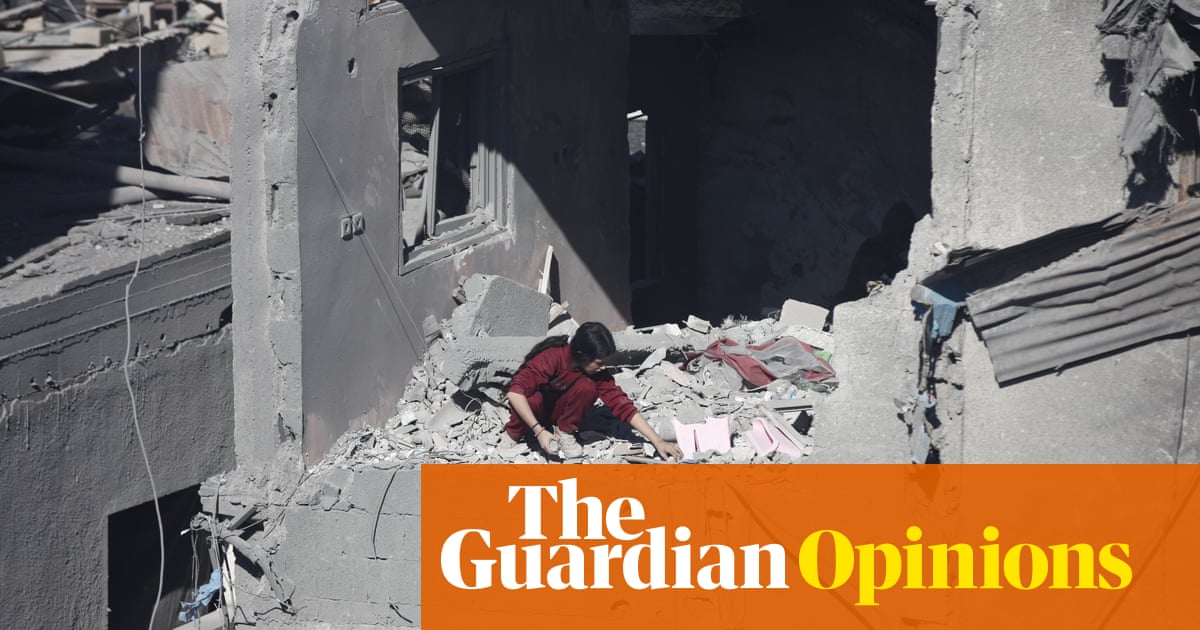
The query isn’t why Palestinians return to destroyed neighborhoods – it’s why anybody would count on us to not. Palestinians return as a result of Gaza is residence. The rubble beneath their toes isn’t particles; it comprises recollections, histories and the foundations of properties the place generations had been born and buried. The place the rubble has develop into a mass grave for 50,000 Palestinians.
In keeping with the UN’s newest evaluation, rebuilding Gaza and the West Financial institution would require $53.2bn over the subsequent decade: $29.9bn for bodily infrastructure and $19.1bn for financial and social losses. These reconstruction efforts the results of 85,000 tons of bombs being indiscriminately dropped over the overall space of Gaza. Behind these staggering figures lies a extra basic query: will Palestinians be allowed to rebuild, or will they be rebuilt over?
The reply have to be Palestinians themselves. The way forward for Palestine shall be decided by, with, and for Palestinians – irrespective of the shape we select. It isn’t for the US, Israel, or the Arab states, who stood by as our individuals died, to resolve what’s finest for us. With out Palestinians, rebuilding efforts merely perpetuate the cycle of violence and dispossession. We aren’t items on their geopolitical chessboard. We’re a individuals with an inalienable proper to self-determination, and reconstruction should serve that proper – not subvert it.
The fast challenges are overwhelming. Over 80% of Gaza’s bodily infrastructure has been decimated – roads, energy vegetation, water services, colleges, universities and each hospital, in contravention of worldwide regulation and primary morality. The elimination of greater than 50m tons of rubble and unexploded ordnance would require a long time to clear and restore semblance of normalcy.
But amid this devastation, Palestinians show outstanding resilience. Journalists have documented individuals returning to northern Gaza, establishing tents in demolition websites, and even starting building work on new buildings. The “ceasefire” stipulated that 60,000 trailers and 200,000 tents ought to have entered Gaza to assist home the forcibly displaced Palestinians – solely 20,000 tents and no trailers have entered as Israel obstructs help. Nevertheless, Israel did ship bombs as youngsters slept; 70% of these murdered since Israel resumed its violence have been girls and kids. In Jabalia, males had been seen constructing the partitions of their destroyed residence – a strong image of dedication to stay. There was whole destruction, however Palestinians stay steadfast like agency mountains. Palestinians are rooted within the land, there isn’t any different.
Does Israel assume when it destroyed the stones, Palestinians will go away? As if their cities weren’t already constructed on the bones of our ancestors.
This dedication isn’t naive optimism, it’s a recognition that to exist is to withstand. We won’t ask permission to relate our ache. We won’t look ahead to good victimhood to earn our humanity. Gaza is the positioning of resistance, rooted in each olive tree, each seed, each grave. We don’t construct as a result of we’re sure our properties will stand eternally; we construct as a result of to cease constructing is to give up. After earlier bombardments, Gazans would acquire concrete from destroyed homes to be crushed into gravel for brand new buildings. Others extracted rebar from broken partitions to strengthen new building.
In the identical interview, President Trump additionally prompt Palestinians ought to go away in order that they now not must be “fearful about dying”. Palestinians aren’t afraid of loss of life – we’re afraid of being killed systematically. The answer isn’t eradicating the victims however stopping these doing the killing. Gaza doesn’t want redesigning as if it had been an empty lodge room; it wants an finish to the cycle of destruction.
After I take into consideration what Palestinians hope for, I’m struck by how primary their desires are. Palestinians wish to get jobs, construct properties, go to the seashore, maybe journey realizing they will return. Palestinians dream of an airport, a seaport, welcoming vacationers, praying at Al-Aqsa mosque, and returning to villages the place their grandparents lived.
What Gaza wants now’s fast: it wants life restored, urgently and unapologetically. It wants lecturers for youngsters who’ve been denied not simply school rooms, however childhood itself. It wants dignified burials for the useless, these whose names are scribbled on their limbs in order that they could be acknowledged beneath the rubble. It wants seeds and soil, not simply to replant crops, however feed these forcibly starved. It wants hospitals the place girls usually are not compelled to offer beginning with out anesthetics, the place the wounded usually are not condemned to die for lack of electrical energy.
And above all, Gaza wants the world to see Palestinians as individuals – individuals deserving of life, freedom and solidarity.
Whereas worldwide help is essential, it can not include strings that undermine Palestinian sovereignty. Overseas help shouldn’t be conditioned on accepting overseas management. It shouldn’t be leveraged to drive political concessions or normalize relations with an occupying energy. True solidarity means supporting Palestinian-led reconstruction with out imposing exterior agendas.
The February letter from Arab overseas ministers to Secretary of State Rubio speaks of implementing “a plan to comprehend the two-state resolution”. Nevertheless, any plan should start with recognizing Palestinian company. With out significant Palestinian participation, with out respecting our proper to decide on our personal political future, such plans stay hole gestures. And anticipating Palestinians to just accept an answer from those that tried to erase them utterly is like asking the wounded to belief the hand that also holds the bloody knife.
The challenges forward are monumental, however so is Palestinian dedication. As Israel continues to bomb ravenous Palestinians, their refusal to desert our land isn’t stubbornness however existence itself. As Israel continues to homicide Palestinian journalists, like Hossam Shabat, we’ll be certain the world not solely sees their crimes, however remembers them. Within the face of those that would make our lives unattainable, we’ll proceed to search out methods to stay. We’ll rebuild not based on another person’s imaginative and prescient however based on our personal wants and aspirations.
This rebuilding is greater than reconstruction – it’s resistance. It’s our refusal to be erased, our dedication to stay and our unwavering perception in our proper to exist on our land. Nothing is extra vital than staying. Nothing is extra revolutionary than returning. And nothing is extra sure than that we’ll rebuild Palestine with our personal fingers, for our personal individuals, on our personal phrases.
![[2-Pack] USB C Wall Charger, 50W 5-Port PD Fast USB C Charging Block,2USB C+3USB A Multiport Plug,Type C Power Adapter Brick Cube for iPhone 16/15/14/13/12/Pro Max/XS,iPad,for Switch,Samsung,Ultra 2](https://m.media-amazon.com/images/I/6113+rPNNeL._AC_SL1500_.jpg)
![[6 Pack] CLOUDY BAY 4inch Smart WiFi LED Recessed Lights,RGBCW Color Changing Recessed Lighting,Compatible with Alexa and Google Home Assistant,10W 2700K-6500K,CRI90+ Wet Location,White Finish](https://m.media-amazon.com/images/I/71j1JN-Wa3L._AC_SL1500_.jpg)