Take a look at our newest merchandise


Marc Bowker’s store, Alter Ego Comics, has been a staple on North Foremost Avenue in downtown Lima, Ohio, for 16 years.
The store sells comics and collectibles and steadily hosts group occasions, together with an annual free comedian e book day, the place they provide away hundreds of comics.
However now Bowker says he would not know what Monday will carry, given the whiplash of President Donald Trump’s tariff coverage.
He stated suppliers are charging him as a lot as 34% extra as a direct results of tariffs, a few of which he is needed to move all the way down to his clients.
“Should you see costs go up at your native small enterprise, it is not as a result of we wish to,” he advised Enterprise Insider. “It is as a result of we’re pressured to.”
About 70% of Alter Ego’s income comes from high-end collectibles based mostly on characters from manufacturers like Star Wars, Marvel, DC Comics, and Disney. These merchandise are made in China, which has been hit with as much as a 245% tariff fee for some items. Bowker stated his revenue margins have been slashed in half on many objects, together with some that have been pre-ordered months in the past.
“The tariff will not be being paid by the Chinese language authorities, the tariff is being paid by the American client and the American small enterprise, and the American firm paying to have the product manufactured in China,” he stated.
Small enterprise homeowners and retail specialists advised BI that smaller companies are being hit exhausting by tariffs. In the meantime, larger, company counterparts are higher positioned to climate the storm.
Trump has framed his financial coverage as explicitly for center America. “President for Foremost Avenue, Not Wall Avenue,” the White Home touted on a web based recap of Trump’s speech earlier this month after his tariff coverage despatched monetary markets tanking and companies all over the world scrambling.
Companies on America’s predominant streets are feeling the impression of Trump’s commerce warfare.
Many unbiased retailers — a few of which have been longtime fixtures of their cities — are struggling to adapt to the tariffs, particularly the steep tariff positioned on items from China. Suppose bridal shops, toy shops, espresso outlets, specialty meals and beverage shops, and importers.
“It is all devastating, however small companies have a worse capability to handle it,” Wayne Winegarden, an economist on the Pacific Analysis Institute, a free-market assume tank, advised BI. “This isn’t pro-Foremost Avenue, that is anti-Foremost Avenue.”
“The bigger firms are in a greater place to soak up a number of the prices,” stated Winegarden. “They’ve in all probability extra fats that they will lower than small companies. Small companies function in decrease margins, to allow them to’t actually soak up it as simply.”
The White Home didn’t reply to a request for remark.
Winegarden stated lots of small companies are family-owned, and are the basic instance of how People climb the financial ladder to center class, higher center class, and past.
“These tariffs simply lower off rungs,” he stated.
Trump has stated People might really feel “short-term” ache on account of tariffs, however specialists stated that ache is probably not short-term for everybody, and that it is the small companies that may exit of enterprise first.
“It is momentary for Starbucks. They are going to stand up to it,” Winegarden stated, including, “But when it is a yr, that is in all probability too lengthy for lots of small companies, and that is everlasting ache.”
Why small companies battle extra with tariffs
Ying Tang/NurPhoto by way of Getty Photographs
Jason Miller, a Michigan State College professor and professional in provide chain administration, advised BI there have been a number of components that make tariffs tougher for small companies. For one, their money circulation is extra restricted, which means they don’t seem to be essentially capable of pay a tariff for a product that they will not really promote till some level sooner or later, generally months later.
Associated tales

Enterprise Insider tells the progressive tales you wish to know
Enterprise Insider tells the progressive tales you wish to know
Small retailers are additionally much less prone to supply instantly from distributors and as a substitute depend on an middleman like a wholesaler or importer. That offers them far much less leverage to barter costs on their items.
“They’re in a take it or depart it state of affairs,” Miller stated.
In distinction, an enormous purchaser like Walmart has much more choices and negotiating energy to get higher offers on the merchandise they promote.
Miller stated toy shops stand out to him as a sector of small companies that might be particularly exhausting hit by the tariffs on China, the place 80% of all toy imports to the US come from.
House owners of unbiased, brick-and-mortar bridal outlets, a standard fixture on predominant streets, beforehand advised BI they’re additionally being hit exhausting, as a majority of marriage ceremony clothes offered within the US come from China.
In distinction, David’s Bridal CEO Kelly Cook dinner stated the corporate, which is the biggest bridal retailer within the US, was extra tariff-resilient due to its bigger and extra various provide chain and manufacturing.
Peter Cohan, affiliate professor of administration at Babson School, advised BI that the ache small gamers on Foremost Avenue are feeling would possible exacerbate the present traits towards market focus, with cascading results on costs, innovation, employment, and financial inequality.
“Small retailers make use of almost half of all US private-sector staff. Their decline would eradicate jobs disproportionately in native communities,” stated Cohan. “Concentrated employers can suppress wages. Retail giants like Walmart have been linked to decrease wages in native labor markets.”
Cohan added that the tariffs might push out native retailers and permit giant corporates to broaden unchecked, which hurts competitors for shoppers and staff. Walmart’s speedy enlargement between 1990 and 2010 was usually related to the decline of native retailers inside the similar area, and Amazon’s rise is equally related to the discount of native bookstores, which diminished range within the publishing trade.
“Dominant retailers use their shopping for energy to demand decrease costs from suppliers, however these financial savings are not often handed to shoppers. As a substitute, suppliers could lower high quality or scale back wages to fulfill calls for,” stated Cohan. “Earnings would focus amongst shareholders of huge corporations, worsening wealth gaps.”
Associated tales
Enterprise Insider tells the progressive tales you wish to know
Enterprise Insider tells the progressive tales you wish to know
Importers instantly serving retailers are struggling, too
Deb Cohn-Orbach/UCG/Common Photographs Group by way of Getty Photographs
When Trump introduced widespread tariffs on April 2, Victor Schwartz and his daughter Chloe Schwartz, who owns and runs VOS Choices, a specialty wine and spirits importing firm based mostly in New York, spent the subsequent two days in an intense math marathon attempting to determine re-price their merchandise — and which of them to surrender.
Per week later, Trump determined to pause so-called reciprocal tariffs on most buying and selling companions for 90 days however left a ten% baseline fee in place, and the Schwartzs’ efforts instantly disappeared into the wind.
“We’re in that place of getting to make agency choices about what our pricing was going to be beneath very unsure conditions,” Victor Schwartz advised BI. “This implies now we have to be a lot tighter in our stock. We needed to scale back some orders the place we might, we stopped some orders the place we might, we did not transfer ahead on new tasks or we delayed them.”
Regardless of being a small, owner-operated firm of simply 19 staff, VOS Choices handles round 600 merchandise from 350 totally different producers all over the world. Its huge portfolio was a advantage, but beneath always altering tariff charges, it grew to become extra of a nightmare.
Alcohol is a closely regulated product, and rules mandate that importers report their costs at the least one month forward of time earlier than something reaches retailers — costs importers can not change later. For Schwartz, this implies deciding costs for Might in March, leaving room for provider negotiations, transport delays, and port processing. Any shock bills on this course of, reminiscent of a sudden change in tariffs, would spell catastrophe for a small enterprise with restricted money circulation.
However shock bills aren’t the one concern, stated Schwartz. Retail shops and eating places that purchase wines from him have not been doing nicely within the first quarter beneath dampened client sentiments and different tariff-associated prices, which he stated brought about his enterprise to be down 16% compared to the primary quarter in 2024.
“If a restaurant has a $20 worth level for his or her white wine, and I can now not supply it at $20, they’ll purchase one thing else, and I am going to lose that enterprise,” stated Schwartz. “The client that was paying $20, they are not going to say ‘sure, we actually preferred that wine, so we’re keen to pay $24 for it.'”
“There’s an inflexibility in pricing when it comes to what the shopper is on the lookout for,” he added.
Schwartz’s enterprise is now the lead plaintiff within the broadest lawsuit but towards Trump’s use of the Worldwide Emergency Financial Powers Act to impose tariffs, which no prior president has executed. The lawsuit argues that Trump’s use of the IEEPA to utterly bypass Congress violates constitutional limits on government energy, and {that a} decadelong commerce deficit doesn’t meet the “uncommon and extraordinary risk” standards within the Act.
As of April 18, the Liberty Justice Heart, a Libertarian authorized group that’s representing this lawsuit in courtroom, has filed an utility with the US Courtroom of Worldwide Commerce for a short lived restraining order to droop Trump’s tariffs.
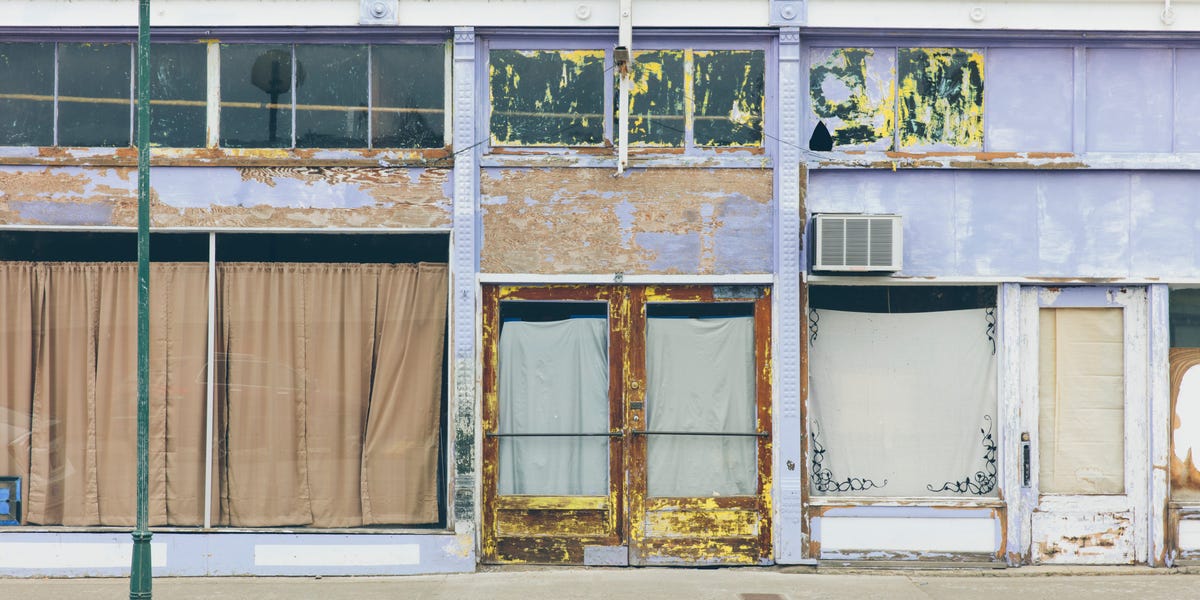
Winegarden, from the Pacific Analysis Institute, stated he’s involved that the tariffs would do what COVID did to small companies. The place Winegarden lived in New York, the storefronts that closed down throughout the pandemic have remained shuttered for years.
“Everybody talks about small companies, proper? They’re the heroes,” Winegarden stated. “Everybody preferred small companies, so it is simply so ironic. Why are we implementing insurance policies that punish them specifically?”
Do you’ve got a narrative to share about how tariffs are affecting your small enterprise? Contact these reporters at kvlamis@businessinsider.com or katherineli@businessinsider.com.
![[2-Pack] USB C Wall Charger, 50W 5-Port PD Fast USB C Charging Block,2USB C+3USB A Multiport Plug,Type C Power Adapter Brick Cube for iPhone 16/15/14/13/12/Pro Max/XS,iPad,for Switch,Samsung,Ultra 2](https://m.media-amazon.com/images/I/6113+rPNNeL._AC_SL1500_.jpg)
![[6 Pack] CLOUDY BAY 4inch Smart WiFi LED Recessed Lights,RGBCW Color Changing Recessed Lighting,Compatible with Alexa and Google Home Assistant,10W 2700K-6500K,CRI90+ Wet Location,White Finish](https://m.media-amazon.com/images/I/71j1JN-Wa3L._AC_SL1500_.jpg)