Try our newest merchandise


Uncommon and fantastical Sixteenth-century wall work which shine mild on the inside design tastes of well-off Tudors have been revealed in a former looking lodge.
Historic England mentioned the wall work at The Ashes in Inglewood Forest, Cumbria, had been exceptional and warranted additional heritage safety.
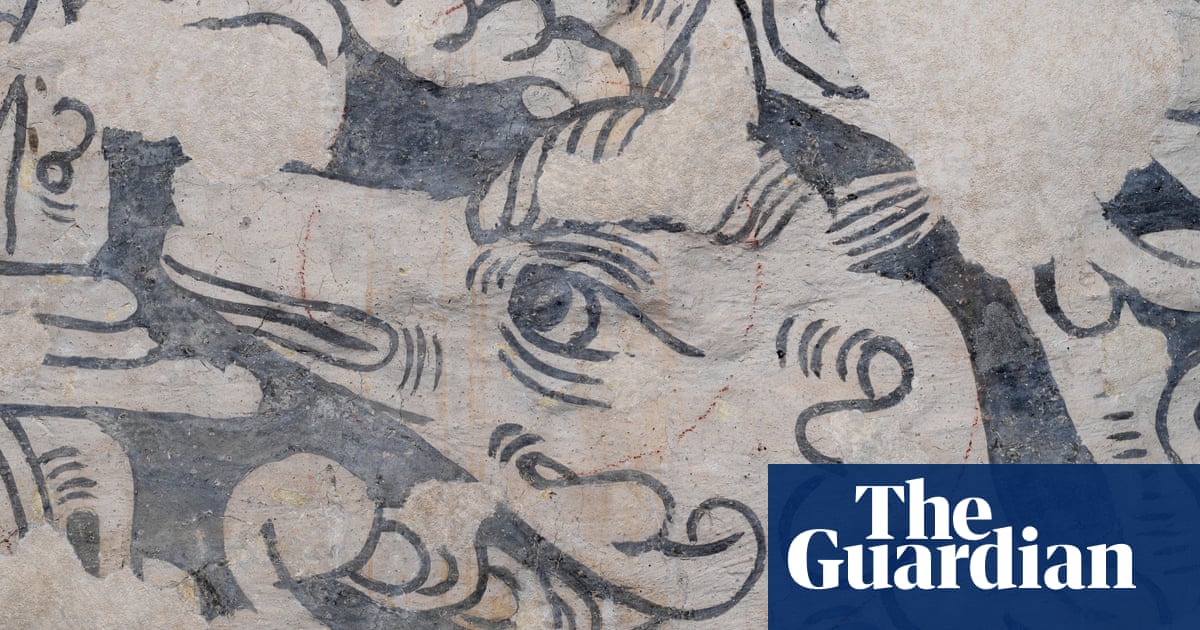
The black and white work almost certainly date from the reign of Elizabeth I and are basically examples of how folks with disposable incomes would then have adorned their properties.
One modern author, Henry Peacham, described the model as “an unnaturall or unorderly composition for delight sake, of males, beasts, birds, fishes, flowers &c with out (as wee say) Rime or motive.”
A piece of Tudor wall portray was discovered on the property within the Seventies, however newer work on the property’s primary bed room uncovered extra work.
Andrea Kirkham, a specialist conservator who has labored on Tudor wall work for 40 years, was introduced in by the home house owners, Jen and Richard Arkell, to assist out.
She mentioned it had been a thrill. “It’s improbable since you are uncovering a portray that has not been seen for hundreds of years. It’s tangible proof of the individuals who lived in the home within the Sixteenth century.”
The work had been of wierd, grotesque beasts and “completely superb, improbable foliage”, mentioned Kirkham. “They’re all barely out, they’re not symmetrical and it’s all very freehand. It’s beautiful.”
Current dendrochronological relationship of the constructing’s timbers has revealed the roof over the earliest a part of the home used timber felled across the winter of 1561-62, which means the work couldn’t have been achieved earlier than then. Elizabeth I’s reign was 1558-1603.
The work are a uncommon discovery in Cumbria, but additionally nationally necessary. “The mixture of motifs found right here is uncommon even by nationwide requirements,” mentioned Myra Tolan-Smith, an adviser at Historic England. “This discovery supplies exceptional perception into the evolution of a big Tudor looking lodge right into a working farm.”
Jen and Richard Arkell purchased the property greater than 20 years in the past when solely a small fragment of wall portray was seen. “Eradicating outdated failing plaster to search out these exceptional motifs and faces trying again at us is a second we are going to always remember,” they mentioned.
Their native MP, Markus Campbell-Savours, mentioned: “It’s fairly clear these work had been a exceptional discover and it’s fantastic information that they’ve now been protected as a part of the constructing’s itemizing. We will solely hope that native folks can take pleasure in them and the historical past of Cumbria for a few years to return.”
Kirkham mentioned Tudor wall work had been uncommon however could possibly be seen in outdated buildings throughout England, though much less so within the north of England. “It’s a very uncommon survival in Cumbria,” she mentioned.
“They’re social historical past … They inform us an terrible lot about folks’s tastes, attitudes, their ideologies, the best way they use color or the best way they use supplies, the designs they select. They inform us about their pursuits and the way they want to be seen by others.”
Historic England mentioned the principle lodge constructing was already Grade II* listed however the amended listing entry now meant that the wall work had been included within the safety.
![[2-Pack] USB C Wall Charger, 50W 5-Port PD Fast USB C Charging Block,2USB C+3USB A Multiport Plug,Type C Power Adapter Brick Cube for iPhone 16/15/14/13/12/Pro Max/XS,iPad,for Switch,Samsung,Ultra 2](https://m.media-amazon.com/images/I/6113+rPNNeL._AC_SL1500_.jpg)
![[6 Pack] CLOUDY BAY 4inch Smart WiFi LED Recessed Lights,RGBCW Color Changing Recessed Lighting,Compatible with Alexa and Google Home Assistant,10W 2700K-6500K,CRI90+ Wet Location,White Finish](https://m.media-amazon.com/images/I/71j1JN-Wa3L._AC_SL1500_.jpg)