Try our newest merchandise


Steinberg, Qualcomm And Microsoft Joined Forces For Musicians, So We Explored A Snapdragon DAW
Rightly or wrongly, most people traditionally assumed that Macs had been the best way to go, for digital music manufacturing. Nonetheless, Home windows has been house to only about each digital audio workstation (DAW) exterior of Apple’s personal Logic and GarageBand. Regardless that Home windows on Arm has been round for a number of years now, DAWs have been the playground of x86 and it has had its limitation, particularly by way of latency. Nonetheless, that is all altering with the appearance of Qualcomm’s Snapdragon X1 Elite notebooks and a collaboration between the Snapdragon producer and Cubase developer Steinberg. A Snapdragon-native DAW has lastly arrived, and actually, there at the moment are two of them.
We acquired our mitts on every little thing wanted to make music on a Snapdragon-powered Home windows laptop computer, across the identical time that Qualcomm’s PJ Jacobowicz went on our Two And A Half Geeks podcast. The enabling bundle of tech we used is a Steinberg IXO22 Recording Pack, which features a Steinberg IXO audio interface, a replica of Cubase AI, a microphone, and a pair of headphones.
This is not actually a evaluation of this package of {hardware}, however it’s a fairly strong means for learners to get into the world of audio manufacturing. The microphone is a large-diaphragm condenser, the ST-M01, and the ST-H01 headphones are giant over-ear cans with closed backs. Neither can be found individually, they usually’re not the best, however they don’t seem to be dangerous. It goes up towards a ton of similarly-priced entry-level packs from the likes of Presonus and Focusrite.
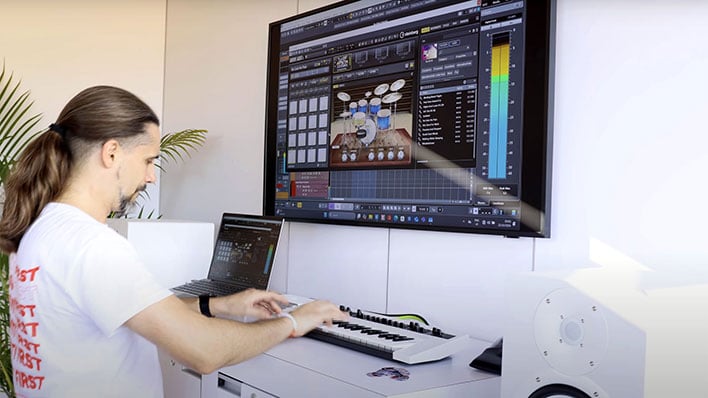
Word that there are a few movies embedded right here on this put up. One is from our Two And A Half Geeks podcast (above) during which Qualcomm’s PJ Jacobowitz explains precisely what is going on on and the backstory of how a collaboration between Steinberg, Microsoft, and Qualcomm got here to be. The opposite (beneath) is my hand at demo’ing the tech and strolling you thru it. And the third is from our journey to Qualcomm Snapdragon Summit, during which Cubase will get a exercise from some extraordinarily proficient musicians, so make sure to examine them out.
Fixing Low Latency Audio On Home windows
Everybody in all probability is aware of that latency is kind of a delay. Enter latency in traditional video video games (and a few trendy titles) can spell the distinction between life and demise, particularly if there is a vital time that passes between a button press and on-screen motion. Within the audio world, delay occurs in two instructions — each enter and output, and the sum of these two latencies is known as a spherical journey latency. It is normally measured in milliseconds, and the variety of milliseconds would not have to get all that top earlier than it is noticeable. If you wish to expertise what it is prefer to make music with high-latency audio, simply obtain a speech jammer app on your smartphone. It is extremely arduous to report.
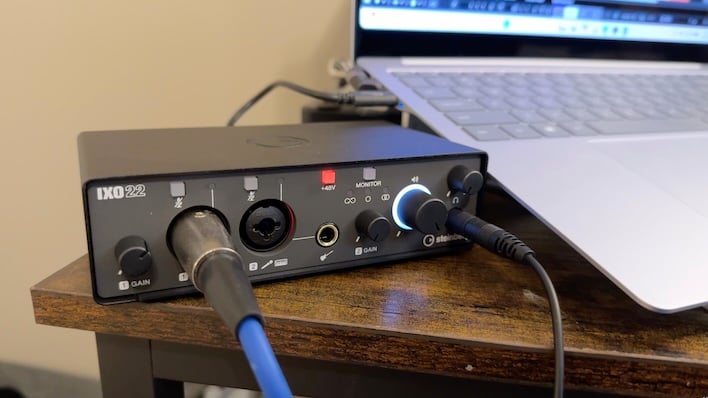
Happily, most audio interfaces, together with the IXO22, assist direct monitoring. That implies that fairly than sending audio to the pc and ready for it to be processed and are available again down the USB line, the interface simply performs the “dry” sign via your headphones or studio displays. That is an okay expertise that has successfully no latency, however generally having a “moist” sign that is been pushed via a compressor, a pleasant corridor reverb, and a contact of refrain might be inspiring for the musician. On Home windows, the ASIO driver API is how that is dealt with industry-wide. For many producers, these low-latency drivers solely work on x86 Home windows machines, and infrequently occasions latency was not nice. That is all within the midst of fixing, although, as we’ll present you reside right here in our in-house demo…
Ben Demos A DAW Setup On A Snapdragon Laptop computer With Steinberg Cubase
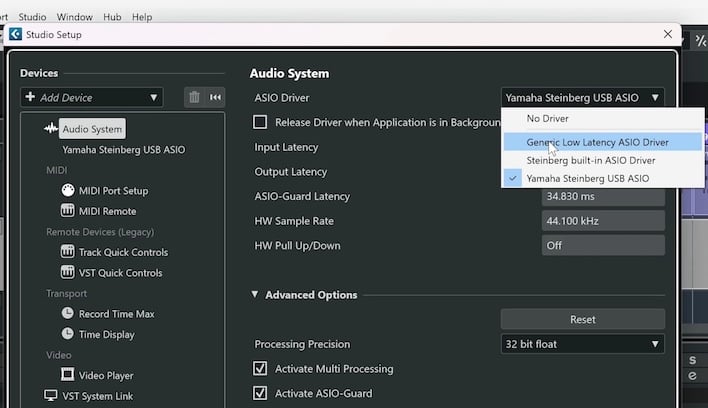
Qualcomm, Microsoft, and Steinberg collaborated on drivers for Home windows on Arm collectively, and the fruits of that labor really produced a few varieties. After all, there may be now an Arm-native low-latency driver for Steinberg USB audio interfaces. That driver is constructed with the precise {hardware} configurations in thoughts and may generate some impressively low spherical journey occasions. We did our testing on a Samsung Galaxy Book4 Edge, which has the Snapdragon X1 Elite 100-84 on board, which is the quickest of the X1E household. We had no downside utilizing the bottom buffer size of 32 samples.
At a playback price of 44.1 kHz, 32 samples of buffer is simply 0.7 milliseconds, however with {hardware} and driver overhead, it finally ends up being extra like 2.7 ms. Add that to round 1.7 ms of enter delay and we get a spherical journey of lower than 5 milliseconds. The velocity of sound is 343 meters per second, in order that’s equal to standing round 1.7 meters away from a speaker, at 5 milliseconds. You may sort of eyeball that measurement in toes by equating one millisecond with one foot. At any price, that is all to say that you just’re in the identical room, and your sound is successfully instantaneous.
Tremendous proficient musicians exhibit Cubase for Home windows Snapdragon (3:54 mark)
On high of the proprietary USB driver, a USB class driver for audio units additionally sprang forth from this collaboration. Meaning Home windows now has an ASIO driver for nearly any USB audio system, which makes utilizing a DAW with out putting in proprietary drivers way more possible. This is not optimum, nevertheless, as spherical journey latencies aren’t fairly pretty much as good, extra like 15-20 millisecond spherical journey, relying on the interface we tried. Regardless, we had good success with our Presonus AudioBox iTwo utilizing the generic driver with a complete round-trip latency of 17.7 milliseconds. That is nonetheless round 3x so long as utilizing the Yamaha driver, and on an x86 PC, that very same interface can do significantly better with Presonus’s driver. Nonetheless, that is an unimaginable leap, contemplating that non-ASIO efficiency is extra like a full second of delay.
Macs have all the time had the higher hand in audio manufacturing, and Apple prolonged its market share when Core Audio generic drivers for USB interfaces acquired the latencies very low with none customized drivers. Because of this all of our Mac evaluations during the last couple of years have included Logic Professional X efficiency; Core Audio makes it straightforward to get a DAW up and working with out extra particular software program. Regardless, this new ASIO driver for Home windows ranges the taking part in subject with Apple. It additionally ranges the taking part in subject for x86 house owners, since this will probably be included as part of Home windows in mid-2025 for each Snapdragon PCs in addition to these with AMD and Intel chips.
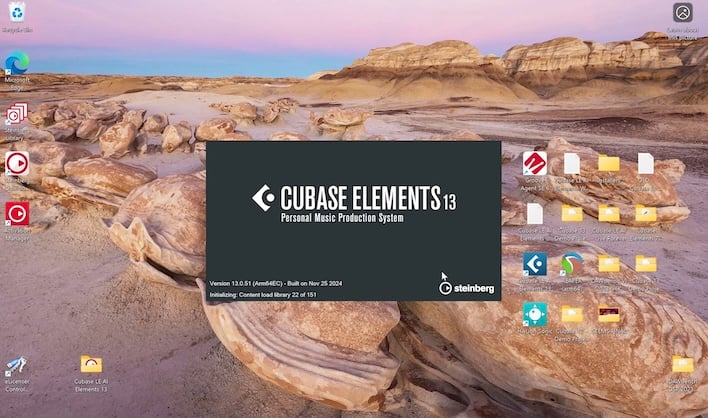
Cubase For Home windows On Snapdragon Preview
All of the {hardware} and drivers on this planet aren’t actually sufficient if you do not have a strong DAW to make use of for recording, modifying, mixing, and mastering. Proper now there are three out there in preview for Snapdragon laptops. Steinberg’s Cubase Parts 13 and Nuendo (which is extra post-production centered fairly than music) and Cockos Reaper 7 are all out there to attempt for your self proper now. Reaper is extensively utilized by bed room studio artists around the globe, due to its highly effective function set and low value, however it would not embrace a lot for results within the field. That is usually no large deal, however VST (Digital Studio Expertise) plugins for Arm are nonetheless of their infancy, so past simply recording and modifying there’s not a lot mixing occurring.
As a substitute, we caught to Cubase. You may be conscious that Cubase 14 was launched late final 12 months, however the Arm/Snapdragon preview remains to be on the v13 codebase. As Steinberg will get nearer to launch, the Yamaha subsidiary will presumably announce a model of Cubase 14 as effectively. We examined in Cubase Parts 13, which comes bundled with a big selection of VST results plug-ins in addition to a number of digital devices, together with HALion, Groove Agent SE, and Iconia Sketch.
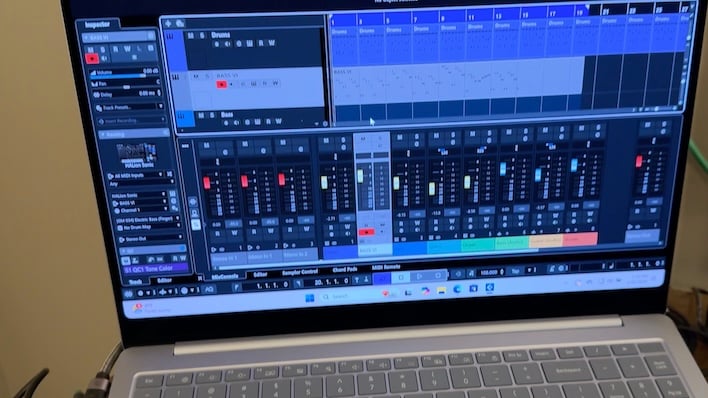
When you’ve watched the video above, you are already conscious that these apps and plug-ins work at very low latencies as effectively. The factor is, it is extra than simply the driving force that determines latency. Each plug-in requires some period of time to course of the incoming audio stream, and there are sometimes a number of plugins throughout a number of tracks. That may add up over time. As we labored, it wasn’t sufficient to overwhelm our 32-sample buffer.
We labored fairly arduous to attempt to overwhelm the system as effectively. Steinberg has a big assortment of demo tasks with 50+ tracks out there for obtain. The efficiency of our Galaxy Book4 Edge was roughly on par with a reference desktop PC working a Core i7-13700K and the newest Raptor Lake microcode. In our testing, we noticed 10-15% general CPU load, with none one core getting too overwhelmed to introduce pops and clicks, all with a 32-sample buffer at 44.1 kHz. As an increasing number of DAWs and VST plug-ins are launched, and as {hardware} producers begin making their very own Arm-native drivers, Snapdragon X1 Elite laptops will probably be a really strong alternative for digital music manufacturing.
The Street Forward For Digital Audio Workstations
The unlucky factor is that a lot of what we have talked about at present remains to be a bit methods into the long run. The USB Class ASIO driver is a couple of months out. Cubase, Nuendo, and Reaper assist is true now simply in preview, though new builds grow to be out there for testing at a speedy tempo. Different {hardware} producers past Steinberg have not launched any form of proprietary driver for Home windows on Arm simply but, although Focusrite guarantees it should make proprietary ASIO drivers early this 12 months. Regardless of the long run focus, what we have seen to this point is a far sight higher than the state of audio manufacturing on Arm-based and even Home windows PCs up to now.
There’s additionally extra that sort of extends past this one collaboration that is coming, too. Microsoft says a brand new Home windows MIDI service model 2.0 can be attributable to ship alongside the generic ASIO driver in 2025. MIDI is definitely fairly cumbersome to get working effectively at a system stage on macOS, so it is a place Microsoft may make issues simpler than the established order. Cause Studios says it should deliver its Cause software program (which works as a standalone efficiency software in addition to a VST plug-in model) to WoA.
Sadly, regardless of this many bulletins, there are some very notable absences from the listing. Native Devices makes Reakt, Guitar Rig, and a bunch of different extensively used sound libraries. Common Audio makes premium audio interfaces and VST plug-ins. And regardless of its detractors, Avid’s Professional Instruments remains to be the default {industry} normal in recording studios around the globe. None of those corporations have any public statements about Arm-native software program to this point. They’re could also be ready for extra customers to demand it, whereas these corporations’ prospects may be ready for assist earlier than leaping. It may very effectively be a chicken-and-egg state of affairs, however Qualcomm may be very lively and dedicated to serving to builders make this leap.
Home windows Audio Manufacturing Retains Bettering
The know-how surrounding making music on Home windows has made large strides over the previous few months. We had been genuinely excited to dive into the preview of Cubase and a really strong ASIO driver from Yamaha and Steinberg. The perfect discovering was discovering simply how steady and performant the software program and our Qualcomm Snapdragon-powered Samsung laptop computer had been. It is nonetheless a preview, and there are nonetheless many apps that computer-assisted musicians use that are lacking. We’re within the early days with this know-how, although, and it looks like an space that each Qualcomm and Microsoft are interested by conquering. We’ll be protecting tabs on this tech, although, so keep tuned to HotHardware because the beat goes on.
![[2-Pack] USB C Wall Charger, 50W 5-Port PD Fast USB C Charging Block,2USB C+3USB A Multiport Plug,Type C Power Adapter Brick Cube for iPhone 16/15/14/13/12/Pro Max/XS,iPad,for Switch,Samsung,Ultra 2](https://m.media-amazon.com/images/I/6113+rPNNeL._AC_SL1500_.jpg)
![[6 Pack] CLOUDY BAY 4inch Smart WiFi LED Recessed Lights,RGBCW Color Changing Recessed Lighting,Compatible with Alexa and Google Home Assistant,10W 2700K-6500K,CRI90+ Wet Location,White Finish](https://m.media-amazon.com/images/I/71j1JN-Wa3L._AC_SL1500_.jpg)